



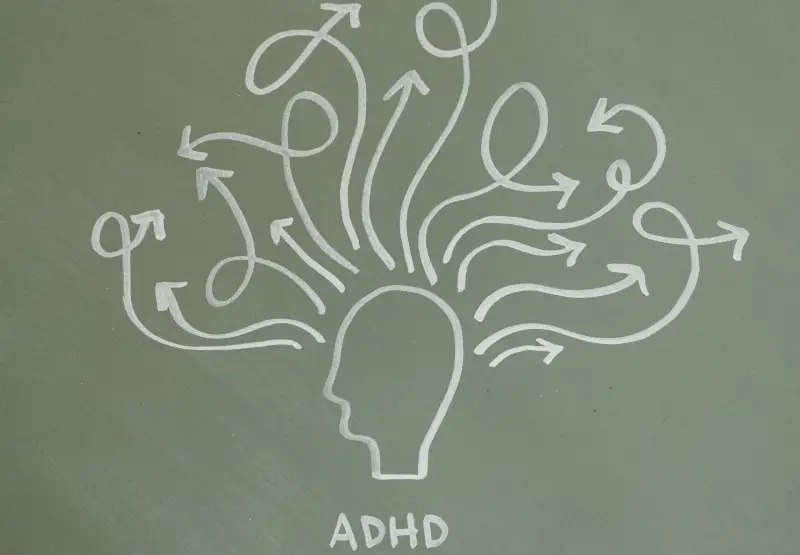
For many people, an ADHD diagnosis in adulthood arrives with a complicated mix of emotions. There’s relief, and then an explanation. And there’s grief, for years spent struggling without the right support, wondering what was wrong. If you’ve been there, or you’re in that moment right now, you’re not alone. Adult ADHD diagnosis is more common than most people realize, and the reasons it gets missed are systemic, not personal.
This post is about why undiagnosed ADHD is so prevalent in adults, what made the condition invisible for so long, and what changes (and doesn’t) after you finally have a name for what you’ve been experiencing.
The Diagnostic Criteria Were Built Around a Narrow Sample
The early research on ADHD focused almost exclusively on hyperactive young boys. That’s not a small caveat. It means the symptom picture embedded in clinical training, in teacher observation checklists, and in the cultural imagination of what ADHD “looks like” reflects a specific and unrepresentative group.
Girls, adults, people of color, and individuals with inattentive-dominant presentations were largely absent from those foundational studies. The result is a diagnostic framework that was built to catch one type of ADHD (the disruptive, visibly hyperactive kind) and reliably misses everyone else.
How ADHD Actually Presents in Adults
The hyperactive child bouncing off the walls is not the typical adult with ADHD. By adulthood, the presentation shifts. Hyperactivity tends to internalize; it becomes a racing mind rather than a restless body, a constant background hum of thoughts that makes sustained focus genuinely difficult. Inattention, time blindness, difficulty initiating tasks, and emotional dysregulation become more prominent.
Adults with ADHD often describe it as knowing exactly what they need to do and being unable to make themselves do it. The executive function deficits that define ADHD, working memory, inhibition, and cognitive flexibility, don’t look like “not paying attention.” They look like chronic disorganization, missed deadlines, perpetual underperformance relative to apparent ability, and an exhausting effort to appear functional.
Masking and Compensation: Why High-Functioning Adults Stay Hidden Longest
Many adults who receive a late ADHD diagnosis developed coping systems over years and decades that obscured their symptoms from teachers, employers, and clinicians. They became experts at compensating, choosing careers with high novelty and stimulation, relying on adrenaline and last-minute pressure to get things done, building external scaffolding (detailed planners, reminders, helpful partners) to substitute for internal executive function.
These strategies work, up to a point. The problem is that major life transitions, like a new job, parenthood, a relationship change, or losing a supportive structure, can remove the scaffolding all at once. That’s often when adults end up in a psychiatrist’s office for the first time, struggling more than they ever have, and finally getting evaluated.
Why Specific Groups Are Diagnosed Even Later
Women and girls are consistently underdiagnosed. ADHD in girls more commonly presents with inattention rather than hyperactivity, and girls are more likely to internalize struggles, stay quiet in class, and develop social masking skills early. A girl who daydreams and turns in incomplete work is less likely to be flagged for evaluation than a boy who disrupts the classroom. That disparity follows women into adulthood.
People of color face compounded barriers: implicit bias in referral patterns, systemic underrepresentation in research, and clinician assumptions that ADHD is a “white middle-class diagnosis.” Studies have consistently found that Black and Hispanic children and adults receive ADHD diagnoses at lower rates than white peers, not because the condition is less prevalent, but because the path to diagnosis is less accessible.
High-IQ individuals can compensate the longest, because cognitive horsepower can substitute for executive function up to a certain ceiling. Gifted programs and advanced academics reward the hyperfocus characteristic of ADHD, while the disorganization gets explained away as “disinterest” or “not living up to potential.”

The Real Cost of Undiagnosed ADHD
Undiagnosed ADHD in adulthood is not simply an inconvenience. Research links it to significantly higher rates of anxiety and depression, often as secondary conditions that develop from years of chronic stress, self-blame, and underachievement. Relationship strain from missed commitments, emotional dysregulation, and inconsistent follow-through is common. Employment instability, financial disorganization, and occupational underperformance relative to education level are well-documented patterns.
Perhaps the most damaging consequence is the internalized narrative. Adults with undiagnosed ADHD typically have decades of hearing that they’re lazy, careless, or just not trying hard enough. That self-concept doesn’t dissolve the moment a diagnosis is made. It requires active work to revise. This is one reason that psychological support alongside medical treatment is important for many adults who receive late diagnoses.
What Changes After a Late ADHD Diagnosis
The practical answer is: quite a bit. A confirmed diagnosis opens the door to treatment, such as medication, behavioral strategies, coaching, and accommodations in work settings. ADHD medication is among the most evidence-backed treatments in psychiatry; the response rates for stimulant and non-stimulant medications in adults are well-established.
But the shift that many people describe as most significant is internal. Understanding that the struggles of the past two, three, or four decades had a neurobiological basis, rather than a character flaw, allows people to extend themselves something they rarely had before: a reasonable explanation rather than blame. That reframe matters.
What doesn’t change automatically is the accumulated impact. Old habits, internalized self-criticism, and patterns built around compensating for undiagnosed ADHD take time and sometimes professional support to address. A late diagnosis is a beginning, not a complete resolution.
How to Pursue an Adult ADHD Diagnosis in Los Angeles
If what you’ve read here resonates, the next step is a formal evaluation, not a self-report quiz or an online screener, but a clinical assessment conducted by a psychiatrist or psychologist trained in adult ADHD. The evaluation process is more thorough than most people expect, and understanding what it involves makes it easier to approach.
Blue Ocean Mental Health conducts adult ADHD evaluations in Los Angeles via telepsychiatry, so the process doesn’t require finding parking or taking hours away from work.
Frequently Asked Questions
Can adults really have ADHD if they were never diagnosed as children?
Yes. ADHD is a neurodevelopmental condition that begins in childhood, but many people, particularly women, people of color, and those with inattentive presentations, were never identified as children. Symptoms may have been present but overlooked, misattributed to anxiety or depression, or compensated for through high effort. An adult diagnosis reflects a condition that was always there, not a new development.
What does undiagnosed ADHD look like in women?
In women, undiagnosed ADHD often presents as chronic disorganization, difficulty finishing tasks, emotional sensitivity, difficulty maintaining relationships, and a persistent sense of underperforming relative to effort. Anxiety and depression are common secondary presentations. Women with ADHD are frequently diagnosed with mood or anxiety disorders first, sometimes for years, before ADHD is identified as the underlying driver.
How long does an ADHD evaluation take for adults?
A comprehensive adult ADHD evaluation typically involves one to two clinical sessions totaling 60 to 120 minutes, plus time for the clinician to review any rating scales or collateral information. Some evaluations include neuropsychological testing, which takes considerably longer. The timeline from first appointment to a confirmed diagnosis or ruling out varies by provider and complexity.
Will I need medication after a late ADHD diagnosis?
Not necessarily. Medication is one component of ADHD treatment, and many adults benefit significantly from it, but the decision is made collaboratively based on symptom severity, patient preference, medical history, and individual goals. Behavioral strategies, coaching, and environmental modifications are also part of a comprehensive treatment plan.
How common is adult ADHD?
Estimates suggest that ADHD affects approximately 4 to 5 percent of adults worldwide, though many researchers believe the prevalence is underestimated due to chronic underdiagnosis. In the United States, millions of adults are estimated to have ADHD that has never been clinically identified.