




You started an antidepressant. You waited the six weeks. You adjusted the dose. It didn’t work, or it helped somewhat but not enough. That experience is more common than most people realize, and it has a clinical name: treatment-resistant depression.
The name can feel discouraging, but it’s important to understand what it actually means. It doesn’t mean your depression is permanent or untreatable. It means the approach needs to change, and there are well-established clinical pathways for changing it. Here’s what those look like.
What Treatment-Resistant Depression Actually Means
Treatment-resistant depression (TRD) is defined clinically as inadequate response to at least two different antidepressant medications, each prescribed at an adequate dose for an adequate duration, typically six to eight weeks at a therapeutic dose. That standard definition matters because “not working” can mean different things: never improved at all, improved partially but not sufficiently, improved initially and then relapsed, or couldn’t be tolerated due to side effects.
By that definition, approximately 30 percent of people with major depressive disorder meet criteria for treatment-resistant depression at some point in their treatment course. That’s roughly one in three, which should signal that this is not a rare outlier scenario but a common and expected challenge in depression treatment.
The more useful clinical framing is this: TRD doesn’t mean you’ve exhausted your options. It means you’ve established that first-line treatment wasn’t sufficient, which narrows the approach and points toward more targeted interventions.
Why Some Antidepressants Don’t Work for Some People
Neurobiological variability is significant. Antidepressants work by targeting specific neurotransmitter systems (primarily serotonin, norepinephrine, or dopamine) but the degree to which those systems are implicated in any individual’s depression varies. A medication that produces full remission in one person may produce no response in someone with a similar symptom picture because the underlying neurochemistry differs.
Dosing issues account for some cases of apparent treatment resistance. Undertreated depression, which is when a medication hasn’t reached a therapeutic dose, or hasn’t been maintained for long enough to assess response, is sometimes incorrectly classified as treatment-resistant. This is one reason the definition requires adequate dose and adequate duration.
Diagnostic accuracy is a critical and frequently overlooked factor. Depression that is actually the depressive phase of bipolar disorder will not respond adequately to antidepressant monotherapy, and antidepressants can destabilize the underlying condition. A thorough reassessment of the diagnosis is a standard part of evaluating TRD.
Medical causes need to be ruled out when depression isn’t responding to treatment. Hypothyroidism, vitamin B12 and D deficiencies, anemia, chronic inflammatory conditions, and certain medications can all produce or maintain depressive symptoms that resist psychiatric treatment until the underlying condition is addressed.
The Next Steps After a Failed First Antidepressant
The clinical approach to treatment-resistant depression follows a sequence of evidence-based strategies, and the appropriate next step depends on what has already been tried.
- Optimization comes first: confirm that the medication was tried at an adequate dose for an adequate duration, that the patient was taking it consistently, and that there were no significant pharmacokinetic factors (like rapid drug metabolism) that may have prevented therapeutic blood levels.
- Augmentation means adding a second medication to potentiate the effect of the existing antidepressant. Commonly used augmentation agents include lithium (one of the most evidence-supported augmentation strategies), atypical antipsychotics such as aripiprazole, quetiapine, or brexpiprazole (all FDA-approved for this indication), bupropion, thyroid hormone (T3), and certain other agents. Augmentation maintains any partial response the existing antidepressant has produced while adding a mechanism that may close the gap.
- Switching means discontinuing the current antidepressant and starting a different one, ideally one with a different mechanism of action. Switching within a class (from one SSRI to another) is sometimes tried but has a lower evidence base than switching classes entirely (for example: from an SSRI to an SNRI, NDRI, or TCA)
Genetic Testing and Medication Selection: The Role of GeneSight
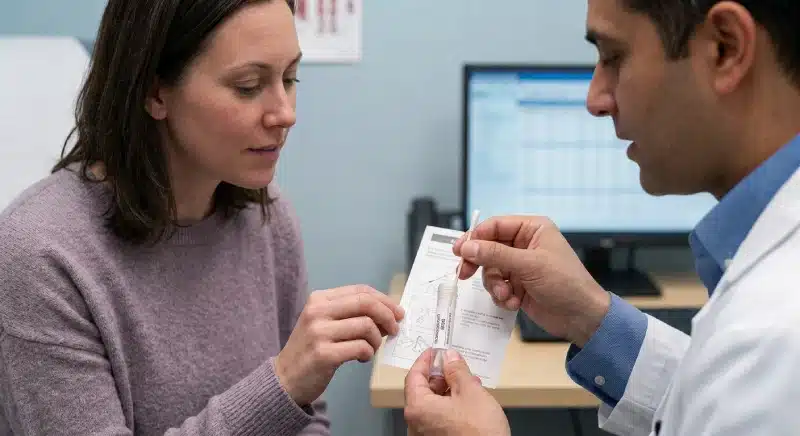
Pharmacogenomic (GeneSight) testing analyzes genetic variants in the CYP450 enzyme system that affect how the body metabolizes psychiatric medications. The test produces a report classifying medications as “use as directed,” “use with caution,” or “use with increased caution and more frequent monitoring” based on whether your genetic profile suggests normal, poor, or rapid drug metabolism.
What GeneSight testing tells a prescriber is primarily pharmacokinetic: whether you are likely to metabolize a specific medication at a normal rate, too slowly (leading to higher drug levels and more side effects), or too quickly (leading to subtherapeutic levels that explain a lack of response). The GUIDED trial, which is the largest randomized controlled trial of pharmacogenomic testing in psychiatry, found modest but real improvements in outcomes when prescribers had access to genetic data.
What it doesn’t do is predict which antidepressant will work best. Efficacy depends on the neurobiological fit between the medication’s mechanism and your depression’s underlying chemistry, a dimension that pharmacogenomic testing doesn’t directly measure. The test is most useful as one piece of a broader clinical picture, particularly when there’s a history of unexpected side effects or when multiple medications have failed without clear explanation.
Interventional Treatments for Treatment-Resistant Depression
When multiple medication trials haven’t produced sufficient response, interventional treatments represent a distinct and highly effective category of options.
- TMS (Transcranial Magnetic Stimulation) is a non-invasive outpatient procedure that uses magnetic fields to stimulate specific brain regions involved in mood regulation. FDA-cleared for depression, typically administered over four to six weeks of daily sessions. It doesn’t require anesthesia, has minimal side effects, and is increasingly covered by insurance for TRD.
- Esketamine (Spravato) is an FDA-approved intranasal medication administered in a certified clinical setting under observation. It works through a different mechanism than traditional antidepressants, targeting NMDA glutamate receptors rather than monoamine systems, and often produces response within hours or days rather than weeks. It is specifically approved for treatment-resistant depression and major depressive disorder with acute suicidal ideation.
- ECT (Electroconvulsive Therapy) remains the most effective treatment available for severe, treatment-resistant depression, with response rates significantly higher than any medication-based approach. Modern ECT bears almost no resemblance to its historical depiction: it’s administered under general anesthesia, causes no pain, and memory side effects are typically mild and short-lived for most patients. It is appropriate for the most severe and treatment-refractory presentations and should not be a last resort reserved for desperation. For the right patient, it should be discussed earlier.
The Role of Psychotherapy in Treatment-Resistant Depression
Psychotherapy, particularly cognitive behavioral therapy and behavioral activation, has an evidence base in TRD as an adjunct to medication, though it is rarely sufficient as a standalone treatment for patients who haven’t responded to adequate medication trials. The mechanisms are different and complementary: medication targets the neurobiological substrate of depression; therapy addresses the cognitive patterns and behavioral habits that depression entrenches over time.
One honest note: patients who are told “have you tried therapy?” after multiple medication failures often feel dismissed, as if the question implies their depression is behavioral rather than biological. That frustration is valid. Psychotherapy is not a substitute for adequate medical treatment in TRD. It’s a component of a comprehensive treatment approach, and it works best when the patient has enough neurobiological lift from medication to engage with it.
Finding the Right Provider for Treatment-Resistant Depression
TRD requires a psychiatrist who is willing to revisit the diagnosis, work systematically through augmentation and switching strategies, and either offer or refer for interventional treatments when those become appropriate. A provider who responds to treatment failure by continuing to prescribe the same regimen or making minimal adjustments is not providing adequate care for TRD.
Blue Ocean Mental Health approaches difficult-to-treat cases with a structured, evidence-based framework: reassessing the underlying diagnosis, reviewing genetic and medical factors, working through augmentation and switching options, and facilitating referral to TMS or esketamine when indicated. The process starts with a thorough evaluation, available via telepsychiatry in Los Angeles.
Frequently Asked Questions
- How do doctors define treatment-resistant depression? – The standard clinical definition is inadequate response to at least two antidepressant medications, each at an adequate dose (therapeutic dose confirmed, not a starter dose) for an adequate duration (typically six to eight weeks). Some researchers and clinicians require two medications from different classes; others accept two trials from the same class. The definition centers on objective criteria rather than subjective frustration with the treatment process.
- How many antidepressants should I try before exploring other options? – After two failed adequate trials, the clinical evidence supports moving to augmentation, switching to a different mechanism, or considering interventional options rather than continuing to try successive antidepressants from similar classes. Continuing to cycle through SSRIs after two or more failures has a diminishing evidence base. A conversation about genetic testing, diagnostic reassessment, and augmentation strategies is appropriate at that point.
- Does GeneSight testing work, and is it covered by insurance? – GeneSight has demonstrated real, if modest, improvements in prescribing decisions and patient outcomes in the GUIDED trial. It is most useful for identifying poor or rapid metabolizers who may be getting subtherapeutic or supratherapeutic drug levels. Commercial insurance coverage varies; many plans cover it for patients who meet criteria (typically two or more failed trials). The manufacturer has a patient assistance program for those whose insurance doesn’t cover it.
- Can treatment-resistant depression go away on its own? – Spontaneous remission of major depression can occur, including in treatment-resistant cases, but the probability decreases with each failed treatment trial and with duration of illness. Waiting for spontaneous remission in TRD while forgoing available treatment carries high cost in terms of continued suffering, functional impairment, relationship damage, and risk of complications including suicide. The evidence strongly supports active treatment rather than watchful waiting for TRD.
- What is the most effective treatment for treatment-resistant depression? – ECT has the highest response rates of any available treatment for severe treatment-resistant depression, with remission rates of 60 to 80 percent in many studies. Esketamine (Spravato) offers faster onset and high efficacy for TRD and acute suicidal ideation. Lithium augmentation has the strongest evidence among medication-based augmentation strategies. The most effective treatment for any individual depends on the specific clinical picture, treatment history, and practical access.